
How Much Does a Stakeholder Facilitation Consultant in the Sustainable Agriculture Industry Cost?
The short answer
For a professional stakeholder facilitation consultant in U.S. sustainable agriculture, a realistic investment can range from approximately $7,500 for a relatively focused engagement to $75,000+ for a complex, multi-month stakeholder process.
As a practical starting point, I would budget:
$7,500+ for a lighter event-based engagement;
$10,000+ for a well-supported half-day engagement;
$20,000+ for a full-day engagement with substantial preparation and follow-through;
and roughly $40,000–$75,000+ for a three- to six-month strategic engagement.
Those ranges are based on my experience designing and facilitating stakeholder processes in sustainable agriculture.
Typical investment: $7,500–$75,000+
Typical timeline: 6–12+ weeks before an event, plus follow-through
Best fit: Consequential discussions involving multiple stakeholder groups and meaningful decisions or deliverables
Poor fit: A simple internal decision involving a small, aligned team and little reputational or strategic risk.
The important distinction is what you're actually buying. Good facilitation at its best is an investment in a consequential conversation that will drive meaningful change in your organization, membership, stakeholder community, or industry. Sometimes, it can do all of those things at once.
Why this question matters
Sustainable agriculture is unusually dependent on collaboration among people who can look at the same issue and see very different realities: growers, agribusinesses, food companies and retailers, nonprofits, researchers, advisers, funders, policymakers and others.
This makes the structure of facilitated conversations extremely important. Get the process wrong and several follow-on effects (none of them positive) can occur. Your staff might spend dozens of hours planning an elaborate stakeholder process while simultaneously trying to execute your annual meeting. Members can leave feeling unheard. Important perspectives may never surface. Your board might lack the information it needs to move forward. A promising initiative can stall because leadership never developed sufficient clarity or stakeholder support.
There's also an opportunity cost. Poor facilitation can delay a major research agenda, a new member initiative, a key funding opportunity, or a promising industry collaboration long after everyone goes home.
What I would look at first
Before asking, "How much does a facilitator cost?" I would answer four other questions.
1. What decision or outcome are you actually trying to enable?
Begin with your destination in mind. Are you trying to gather perspectives? Identify previously unseen risks? Develop recommendations? Test an initiative? Inform a board decision? Produce a report? Create the foundation for a new program?
A 90-minute conversation designed to answer one clearly defined question is fundamentally different from a four-hour cross-sector dialogue intended to inform an organization's future strategy.
The clearer you are about the desired outcome, the easier it becomes to determine how much facilitation you actually need.
2. Who needs to be heard?
Participant count matters, but stakeholder architecture matters more. With 100+ participants, someone needs to consider how people will be grouped, what roles they will play, how questions will progress, who will capture insights, and how quieter or less powerful voices will be invited to contribute in a meaningful way.
Seniority matters, too. A room involving C-suite leaders or influential industry stakeholders typically warrants additional preparation because the business, reputational and relationship stakes can be higher.
Interestingly, competing viewpoints alone don't necessarily increase the price of your investment. A facilitator should be able to handle disagreement.
What increases the investment is the work created by the complexity inherent to facilitation: research, preparation, confidentiality considerations, stakeholder coordination, deliverables and follow-through.
3. How much work happens before and after everyone enters the room?
This is where buyers frequently underestimate the engagement. An effective facilitator might help develop the agenda and narrative arc, interview participants, prepare panelists, write questions, create workshop exercises, develop facilitator guides, plan transitions, advise staff and anticipate difficult moments.
Then comes the event.
Afterward, potentially, comes another body of work: analyzing participant feedback, identifying patterns, developing recommendations, producing an executive briefing or whitepaper, facilitating follow-up working groups and creating thought-leadership content.
If you only compare what different facilitators charge for their hours "on stage," you might be comparing entirely different services.
4. How much independence does the conversation require?
Sometimes your own executive team should do the facilitating. But sometimes it shouldn't.
Power dynamics can affect what people are willing to say when staff, funders, employers, customers, or organizational leaders are sitting in the room. A credible independent facilitator can create additional distance between the organization asking the question and the stakeholders answering it.
For particularly sensitive discussions, organizations might also consider confidentiality mechanisms. The Chatham House Rule, for example, allows information from a discussion to be used without revealing the identity or affiliation of the person who shared it.
A real-world perspective
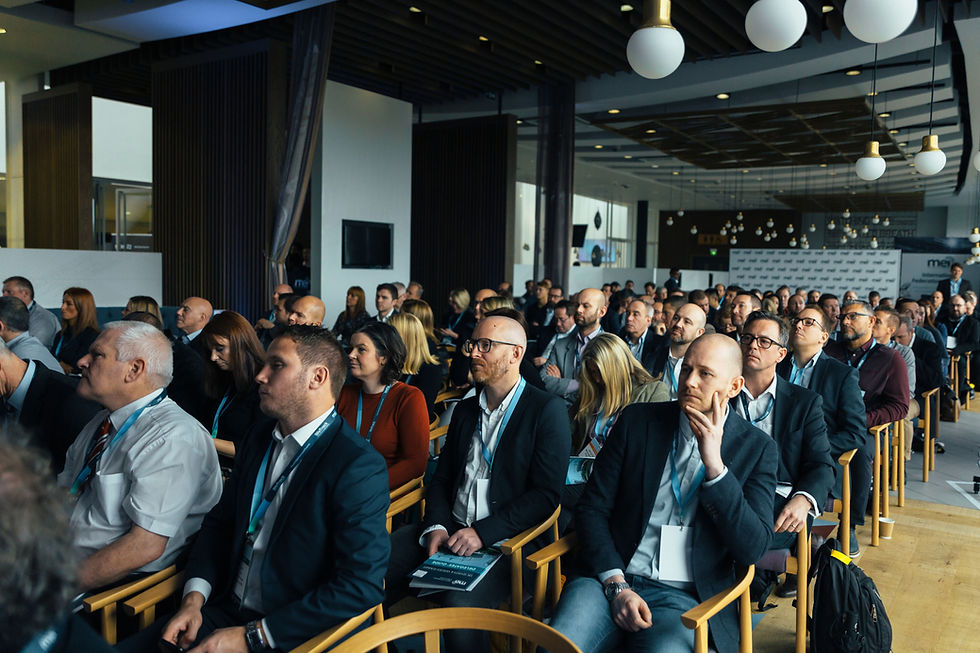
Nate's experience: Field to Market's 2026 Cross-Sector DialogueIn June 2026, I worked with Field to Market: The Alliance for Sustainable Agriculture to help design and facilitate its Cross-Sector Dialogue on risk and resilience in U.S. sustainable row-crop agriculture.Roughly 110 attendees participated across Field to Market's five sectors: Grower Organizations, Agribusinesses, Brands & Retailers, Civil Society and Affiliates. Field to Market had already developed a strong initial vision. Through planning conversations, we refined the agenda and desired outcomes. I developed a detailed facilitation process, participated in advance conversations with panelists, moderated expert discussions and helped guide a structured workshop. Workshop participants moved through three rounds of small-group discussion. Table Captains guided conversations while Reporters documented insights. Participants initially explored issues from their own sector perspectives, then moved outside their sectors to challenge and improve ideas before developing more actionable recommendations. Thirteen table worksheets ultimately contributed to the analysis. Afterward, we converted the conversation into something the organization could continue using: a co-developed 23-page report. Human-generated notes and Mentimeter responses formed the source material; ChatGPT assisted with post-dialogue analysis and synthesis, with human reviewers vetting and editing the resulting work. The process surfaced issues influencing resilience in the sustainable row-crop value chain ranging from farm economics and land tenure to data, trusted advisers, infrastructure and cross-sector alignment—and identified possible future roles for Field to Market as a convener, translator, connector and neutral bridge-builder.That's what I mean by facilitation: The meeting was important, and it laid the groundwork for the follow-on organizational intelligence that can guide future decision-making and strategy.
What this usually costs
Typical investment range
Based on the type of work I do, I would use these figures to budget for your facilitation needs:
Engagement | Planning investment |
Focused/light facilitation | $7,500+ |
Substantial half-day engagement | $10,000+ |
Full-day engagement with significant support and deliverables | $20,000+ |
3–6+ month strategic facilitation engagement | $40,000–$75,000+ |
These are not universal market averages. Different consultants and firms will price differently, and a tightly scoped virtual session could cost considerably less.
As one concrete reference point, I recently worked with a 200-member nonprofit to lead a half-day facilitated session (panels + workshop). The client's investment was a $10,000 all-in fixed fee, including travel. The scope included pre-event strategy and facilitation design, onsite facilitation/moderation, post-event engagement, strategic report development and three subsequent thought-leadership articles.
What changes the investment level
Investment generally increases with:
more stakeholders and higher participant seniority;
sensitive or confidential subject matter;
additional research and stakeholder interviews;
more panels, sessions or stage time;
extensive travel;
longer events;
reports, whitepapers and executive thought leadership;
done-for-you project management;
post-event working groups or implementation support; and
compressed timelines requiring the consultant to reprioritize other work.
I typically prefer bundling expected travel into a fixed fee because it gives the client one predictable number. Separating travel expenses is perfectly reasonable when the client prefers it.
What a buyer should be suspicious of
I'd be cautious if a prospective facilitator spends most of the sales conversation describing their proprietary methodology rather than asking about your goals. I'd also question vague deliverables, minimal preparation, an unusually cheap "day rate" for a strategically complicated engagement, or a proposal focused almost entirely on what happens on stage.
Remember: A facilitator's job is to help your stakeholders' voices bubble up to the surface, not their own voice.
When the less expensive option is perfectly adequate
Don't spend $20,000 merely because you can. If a small group already knows and trusts one another, the issues are visible to all parties, the decision has limited downside, and you need to answer one big question quickly, an internal strategy session might be exactly right for your organization.
You could also engage an outside facilitator narrowly—for example, to design the questions, facilitate a 90-minute virtual discussion via Teams or Zoom, and produce a short executive summary.
How long should this take?
In a perfect world, hire your facilitator 10–12+ weeks before the gathering. I would consider 6–8 weeks a reasonable minimum for a substantial engagement.
For stakeholder research, budget approximately two business weeks when interviews are required. A modest interview component might represent eight to 10 hours of preparation, interviews, note synthesis and analysis.
The live facilitation might last only several hours, but it's also highly visible, and it's a reflection of all the pre-work that came before it. Agenda architecture, questions, transitions, panel preparation, workshop materials and executive review all require time and attention to detail.
For a substantive post-event report, four to six weeks is a useful target; four to eight weeks might be reasonable depending on complexity and the number of reviews required.
If someone needs significant facilitation in two weeks or less, one of three things probably needs to happen: reduce scope, pay a premium for the opportunity cost and concentrated work, or find another solution.
Options: three sensible ways forward
Option 1: Handle it internally
Best when: The group is small, relationships are strong, the issue is relatively straightforward and the downside risk is limited.
Advantages: Lowest outside investment, deep institutional knowledge and potentially faster execution.
Tradeoffs: Staff time is still a real cost. Internal leaders might also struggle to participate fully while simultaneously running the process.
Watch for: Assuming people will speak freely just because they know the people in the room. In many cases, power dynamics and fear can actually have the opposite result.
Option 2: Bring in specialized outside support
Best when: The issue is consequential, the room includes multiple stakeholder groups, independence matters, substantial outputs are expected, or the gathering could shape a larger initiative.
Advantages: Neutrality, dedicated preparation capacity, experienced process design, and the ability for staff and executives to participate instead of constantly managing the room.
For sustainable-agriculture conversations, I strongly prefer subject-matter fluency. A facilitator who understands agriculture can recognize when an apparently ordinary statement carries significant implications. They know when to probe further.
Tradeoffs: Higher investment and additional onboarding.
Watch for: Facilitators who think they know so much about the subject that they seem to be gunning for a keynote speech rather than bringing a posture of curiosity and humility required to draw the best thinking out of your participating stakeholders.
Option 3: Use a hybrid approach
Best when: Your organization has strong internal expertise but wants outside judgment at a few leverage points. Your team might manage logistics while an outside adviser helps architect the conversation, prepare questions, facilitate the highest-stakes portions, and synthesize findings afterward.
Advantages: Preserves internal ownership while putting outside expertise where it matters most.
Tradeoffs: Roles must be exceptionally clear.
Watch for: False economy. If your senior staff spends 80 hours compensating for an artificially narrow consulting scope, you haven't necessarily saved money.
Note: For many associations and sustainable-agriculture organizations, this is the option I would investigate first. Don't outsource institutional ownership. Do outsource the portions of the process where independence, facilitation expertise, and concentrated strategic attention can create exceptionally high value for you and your stakeholders.
How to choose the right partner
I would ask prospective facilitators:
What do you think we (our organization, association, etc.) actually are trying to accomplish?
What would you need to understand before designing the facilitation process for us?
Describe a time when you've worked with stakeholders like ours? What were the goals, and what was the result of the engagement?
How will you ensure different groups have meaningful opportunities to contribute?
What exactly happens before, during and after the event?
How will you turn participant insights into something our leadership can take action on?
How do you use artificial intelligence tools, if at all, and how do you ensure thorough human judgment and review end-to-end?
What confidentiality or attribution rules should we consider?
Ask for a detailed scope of work. I also recommend asking serious candidates to present three possible approaches, not merely one project concept. You're partly testing whether the consultant can expand your thinking.
For agriculture-specific work, domain fluency and deep industry knowledge are valuable. So are interviewing skills. The facilitator should be able to translate technical language into plain English while drawing insights from participants rather than demonstrating how much the facilitator knows.
Don't underestimate chemistry, either. This is demanding work involving human beings. Competence, kindness, curiosity and the ability to make a difficult process enjoyable all matter when making a facilitation investment.
When Silver Maple Strategies might be a strong fit
Silver Maple Strategies is generally strongest when the work is consequential or complicated and when facilitation, strategic communications and implementation intersect.
For stakeholder facilitation specifically, we're likely to be a stronger fit when:
agriculture, food, conservation or sustainability is central to the discussion;
associations, companies, or membership-driven organizations are convening multiple sectors;
the organization wants more than a day-of moderator;
executives need stakeholder insight to inform future decisions;
interviews, qualitative research, or synthesis are important;
the gathering should produce a report, executive briefing, or thought-leadership platform;
human-centered and transparent AI-assisted analysis could responsibly strengthen synthesis; or
leadership wants a collaborative partner before, during and after the gathering.
When Silver Maple Strategies is probably not the right fit
We're probably not the right provider if you primarily need the lowest-cost person available to run a meeting or routine administrative event support.
We're also likely overbuilt for a straightforward internal conversation among a handful of colleagues who already understand the issue and simply need 30 minutes to make a decision.
In those circumstances, look for an internal strategy leader or another specialist matched to the actual problem.
If you are scouting for additional independent talent with dedicated agriculture expertise, I recommend these expert consultants, listed in alphabetical order by the founder's last name. I trust them and know their work to be of the highest quality:
Grant Bolton, Founder, Bolton Et Al
Services include: Product Positioning | Sales Enablement | Executive Positioning | Technical Content
Jacque Matsen, Owner and President, Relate Strategies
Services include: Communications Strategy Planning | Thought Leadership Development | Issues & Crisis Response Planning | In-House Communications Development
Rod Snyder, Principal and Founder, Junction Strategies, LLC
Services include: Policy Advising & Issues Management | Coalition Building & Multi-Stakeholder Facilitation | Supply Chain Sustainability Strategy | Public Speaking
Questions executives should ask before deciding
Before signing a facilitation agreement, I would bring the leadership team together and ask:
What decision or outcome are we really trying to enable?
Whose voice is essential—and who isn't currently represented?
What might people be unwilling to tell us directly?
What information do we need coming out of the room?
What should happen with that information afterward?
Could our team credibly lead this conversation while also participating in it?
What happens if we postpone this conversation for another 90 days?
If the gathering goes exceptionally well, what becomes possible that isn't possible today?
Remember, facilitation should be focused on creating possibility for your stakeholders.
Bottom line
For consequential stakeholder facilitation in sustainable agriculture, I would start budgeting at approximately $7,500, expect substantial half- or full-day engagements to reach $10,000–$20,000+, and expect complex three- to six-month engagements to potentially reach $40,000–$75,000+.
But don't choose your approach by price first. Instead, start by identifying the decision you're trying to enable, whose perspective matters, what must happen after the conversation, and how much independence the process requires.
Then determine whether you need an internal facilitator, a specialized outside partner or a hybrid model.
A great facilitation process should surface original, actionable insights from people critical to your organization's future—and leave participants thinking: That was worth my time. They heard us. We learned something. And now we know what we can do next.
About Nate Birt / Silver Maple Strategies
Nate Birt is the founder and CEO of Silver Maple Strategies, a communications and organizational-growth advisory serving organizations across the United States. His work spans executive communications, stakeholder engagement, facilitation, editorial strategy, cross-sector partnerships, qualitative research and responsible AI adoption, with particularly deep experience across agriculture, food, conservation, sustainability, education, associations and mission-driven organizations.
His stakeholder-facilitation work combines his experience as a journalist and interviewer with sustainable-agriculture subject-matter knowledge and end-to-end strategic communications support.
Call to action
If you're planning a consequential stakeholder gathering in sustainable agriculture and aren't sure whether you need outside facilitation—or how much facilitation you actually need—contact me at Silver Maple Strategies to compare notes. If we're not the right fit, a useful first conversation should still leave you clearer about what to do next.



Comments