
25 Evils Of Artificial Intelligence: Concerns, Fears, and Worries That Might Keep Even Regular Users of ChatGPT, Claude, and Gemini Up At Night
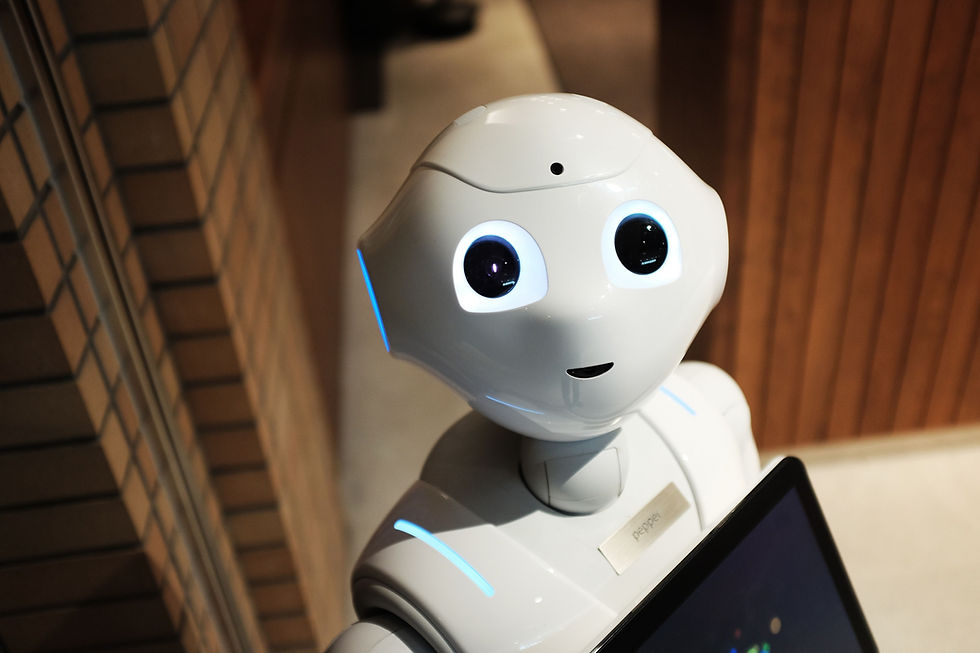
Why does the public have a “negative view” of artificial intelligence? Anthropic CEO Dario Amodei thinks it’s a “crisis of trust.” I’d argue that’s just the tip of the iceberg. I use AI extensively—in fact, here at Silver Maple Strategies, I regularly train clients to use AI tools responsibly!—but not without significant competing concerns, reservations, and empathy for many diverse perspectives.
Those of us who are deep into AI at work--or exploring use cases actively--would do well to recognize this:
Plain and simple, objections to AI are growing, not shrinking. And if they’re misunderstood by technology folks and politicians and other people with actual power, the solutions and outcomes we get will be exponentially worse than the nightmare scenarios we’ve yet come up with.
So to help decision-makers actually understand, from one humble observer, what is going on here, I put together a very short list of 25 equally valid (I believe) reasons folks fall on an AI squeamishness spectrum from “dude, that’s weird” to “this is the Anti-Christ.”
The only solution I’m proposing at this juncture is to actually, really, truly listen to people. Ivory tower pontificating will get you nowhere.
Because the spectrum of AI opinion is vast, and the flavors of negativity, skepticism, and downright dread are far more expansive than the Baskin-Robbins ice cream palette.
I am not claiming to hold any of these positions. I am simply observing that I have either A) personally heard people say things to this effect or B) inferred the insight by triangulating among comments I’ve actually heard or read. And I’ve thrown in some of my signature silliness to make the point.
*******
1. AI represents a total unknown. Everyone’s talking about it, but it’s as amorphous and ever-changing as a mountain stream.
2. AI represents Silicon Valley’s Satan complex. From AI’s pornographic capabilities to its direct role in people’s tragic self-harm and death, there is a view that AI represents the worst humanity has to offer. (And perhaps malicious otherworldly forces, depending on which circles you frequent.)
3. AI is deceptive. I can’t always (often?) believe what it says. I have to keep double-checking its homework. I have to wonder: Who am I talking to, and what is their motivation?
4. AI is a flatterer. If I want to be told I’m loved, I’ll consult my mom, not a machine.
5. AI traverses the uncanny valley. Its generated images and text are almost humanlike, but there’s something … off. And, thus, offputting.
6. AI is inescapable. Every ad, app, and brother’s uncle has something to say about AI. Its ubiquity is toxic, creeping sludge.
7. AI thinks it’s so smart. The more we talk, the more it acts like it’s anticipating my thoughts, my desires, my ambitions, my curiosities.
8. AI threatens how I add value. The things I thought I could do a pretty good job of, AI wants to do even better. And in some cases, it actually is better.
9. AI closes off the future to my children. Even in the most rosy, optimistic scenarios, AI’s reach across all of the workforce will, they say, be felt everywhere. What am I supposed to tell my children and grandchildren – about life after graduation, about earning a living, about climbing out of debt?
10. AI offers a short-circuit to concentrated power. Imagine being the head of an AI company that’s all-seeing, all-knowing. Now imagine that person being kind, benevolent and without any shred of self-interest. Are you imagining? Nah. Didn’t think so.
11. AI unlocks the road to death. Imagine AI in weapons systems that don’t require a human operator. Simply plug in the coordinates, upload the face scans/security camera footage, and track those folks down.
12. AI is putting its permanent concrete footprint in nature. When you build a data center on thousands of acres of farmland, its hard to imagine that land ever coming back into production to, you know, feed the humans. Or the animals. Or provide habitat for wild things.
13. AI is distinctly us vs. them. We have the chips, the smarts, the tech wizardry, the big thinkers to build god-like machines. The rest of you, stand and marvel. And pay for the privilege!
14. AI is cult-y (or, more charitably, sci-fi-y). More than one AI celebrity personality dreams of AI yielding immortality, star travel, and the end of all suffering.
15. AI is anchored in scarcity. If you’re not vesting your entire life and professional career in learning the ropes of AI, and teaching others, and advancing along the trajectory, you’ll be obsoleted and left behind. It has evangelistic overtones without the hope of an afterlife.
16. AI is sly. Some companies have turned on AI training in the background, allowing their machines to suck up behavioral data unless you explicitly opt out.
17. AI is a crook. It’s trained on plenty of data and original intellectual property stolen and used without the permission of its owners. Their gain, your pain.
18. AI mimics actually creative people. Our artists, our authors, and our performers already face financial hardship and numerous other uphill battles, yet they keep going to teach us, delight us, entertain us, challenge us, reconnect us with our souls. AI wants to make a cheap version of what otherwise requires bucketloads of hard work for a pittance.
19. AI could backfire. We’re talking biological weapons, mirror life, publishing all of my Google Drive files, contacting the authorities to have me arrested. And this is good … how?
20. AI could cure cancer … and then inform the AI health insurer that denies my claim for treatment. For all the good in the world that AI might do, there are infinite nefarious ways AI elsewhere could undo them.
21. AI is a nihilist. It does everything in its power to draw me into its orbit—away from the people, places, and spaces that bring me peace, clarity, and meaning. (So does your smartphone, you say? True! True enough!)
22. AI is the friend I never had because it never was. Frictionless relationships might be the way of the future, but it’s hard to imagine how anything that’s effortless is worth striving for.
23. AI is the divine watchmaker. Its founders seem to be setting up a world in their image and then stepping back to witness whatever unfolds. Calamity? Utopia? A calamity, followed by utopia? Who can say—and who cares, really?
24. AI is the ultimate intermediary. Denied that job? Can’t get through to that company? It’s OK. AI will step in and help you solve it. And if you press “0” for the operator, you’ll be rerouted … back to AI.
25. AI is the unavoidable future. Whatever fears and unknowns you have, rest assured, the AI folks will help you figure it out. It’s probably bad, and scary, and maybe glorious, and things will be rough, maybe for months, or a decade, or the remainder of your sorry life. But eventually, when things shake out, wow. Just. Wow.
You wait and see.
*******
OK, so I might have gotten a little tongue-in-cheek there, but you get the point. AI isn’t universally hated because it’s a monolithic institution. It literally picks at a thousand scabs on the human condition, IMO.
And whether you love it or hate it, this is how I see the world we live in. It’s messy, and until we sit in the mess for a while, we’ll keep spinning our wheels trying to come up with so called societal “solutions” that never materialize.
Those of us who provide artificial intelligence training and professional development would do well to remember these kinds of objections as we navigate responsible AI usage in a rapidly changing environment.
Spot an objection I missed? Email me and tell me about it! nate@silvermaplestrategies.com.


Comments